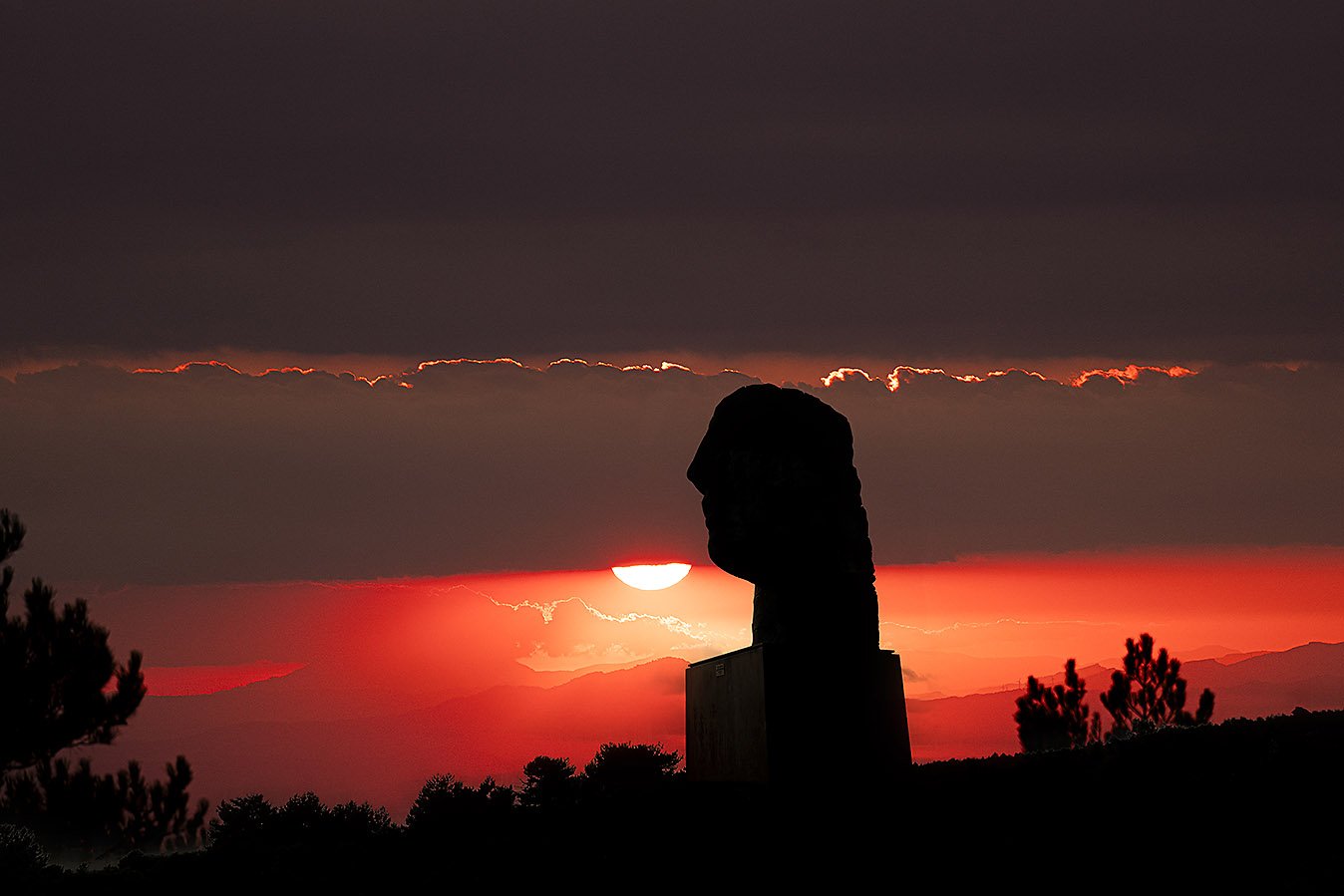
Cracked Theseus on the slopes of Mount Etna
I have always admired, in ecstasy, the works of Igor Mitoraj, those large bronze bodies, busts, and heads with a hidden fascination that speak of gods or demigods fallen to Earth who have become, like every other human, fragile and broken, as shown by the cracks in some or the unfinished bodies of others. Bodies that nonetheless radiate an extraordinary strength, precisely because they seem to know what it meant to be immortal and what it means now to be human and mortal.
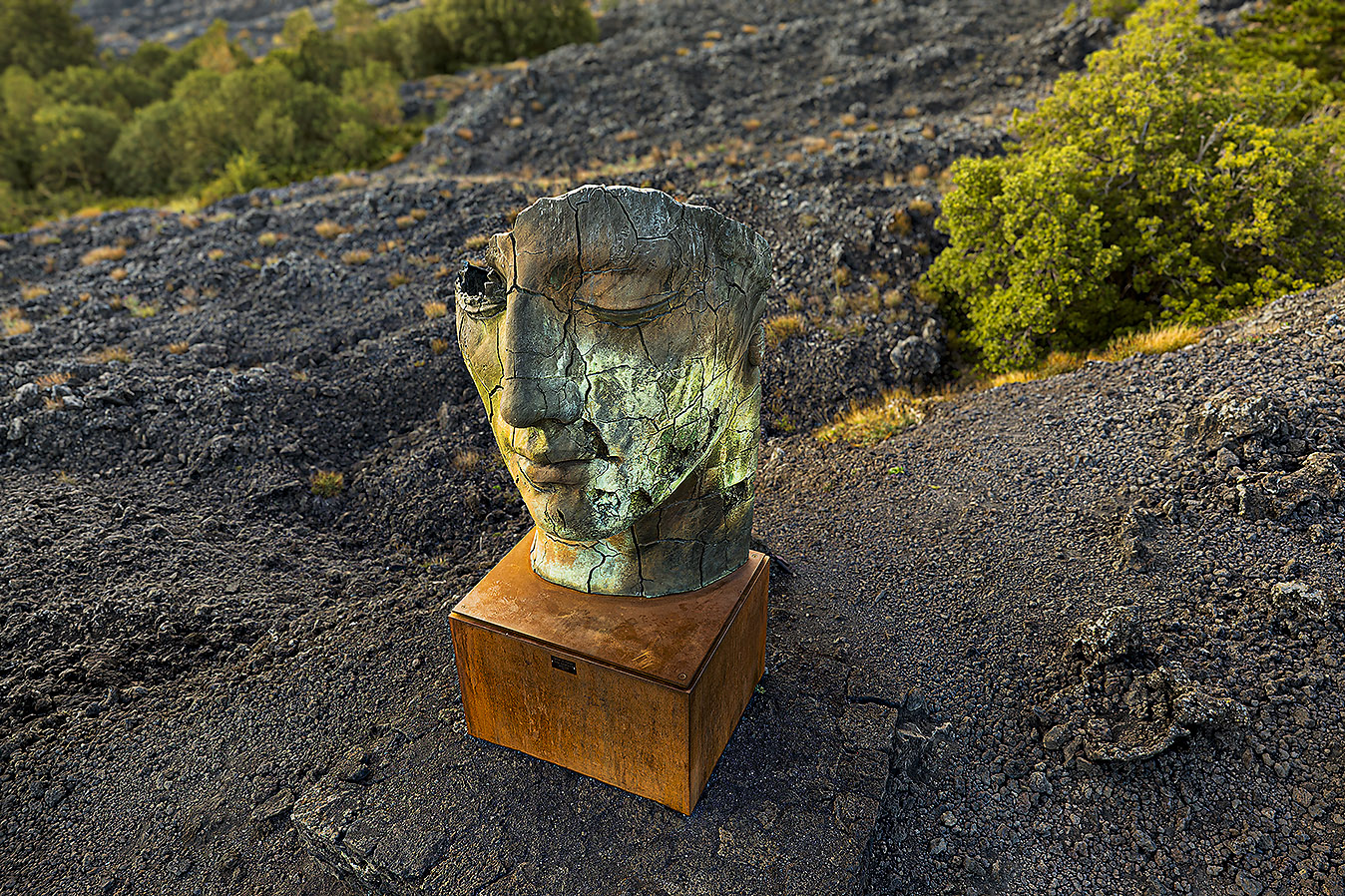
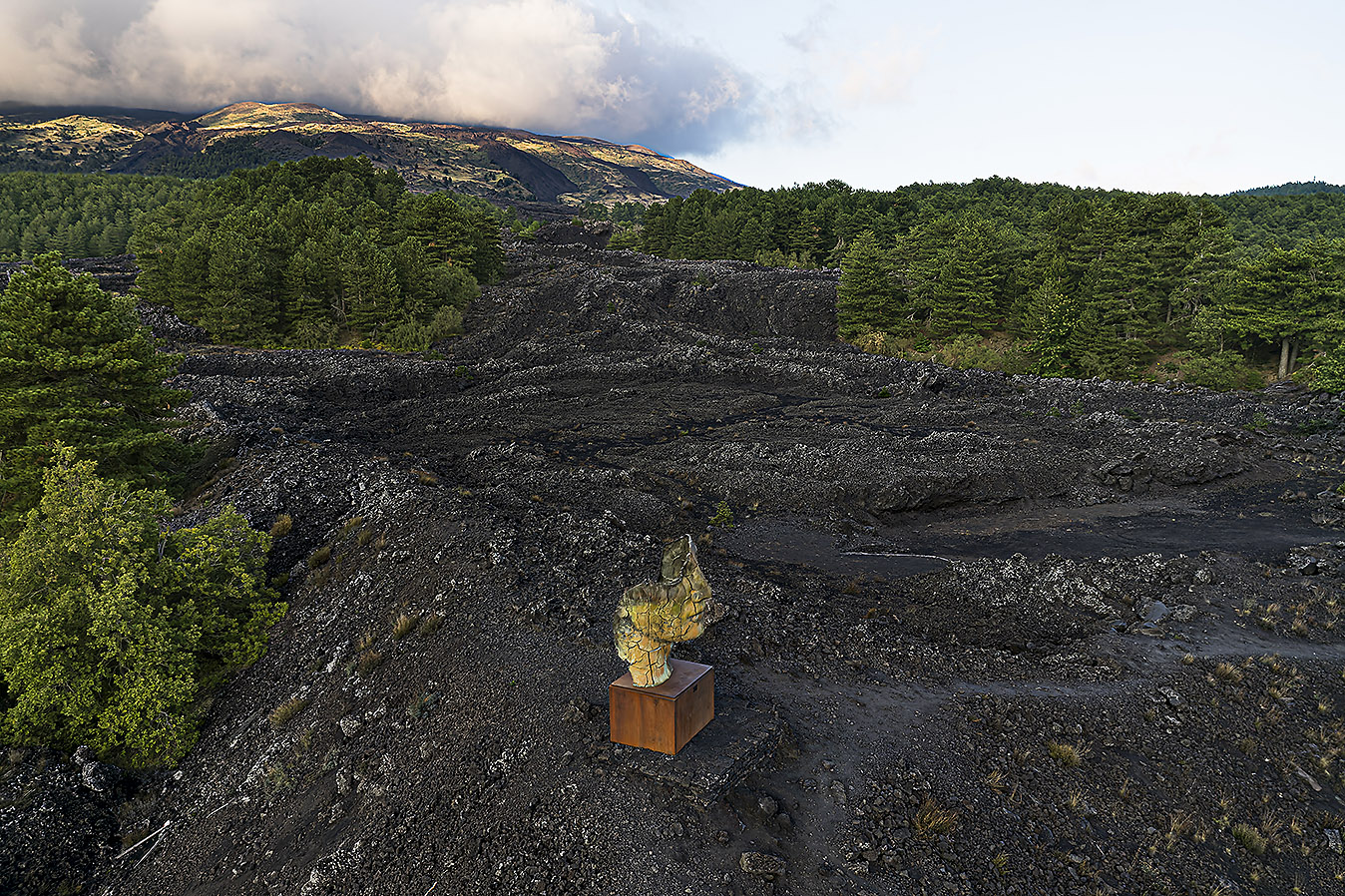
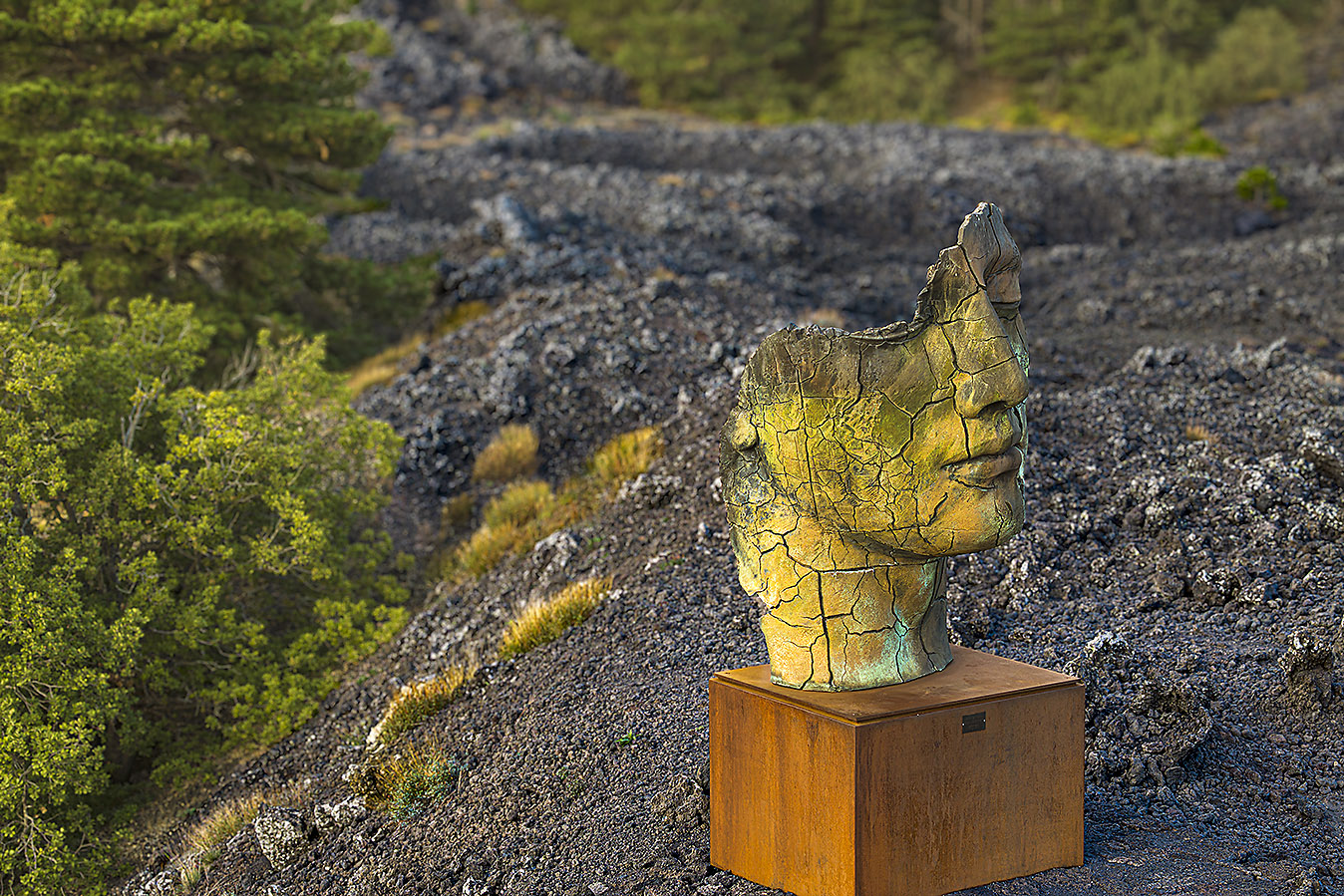
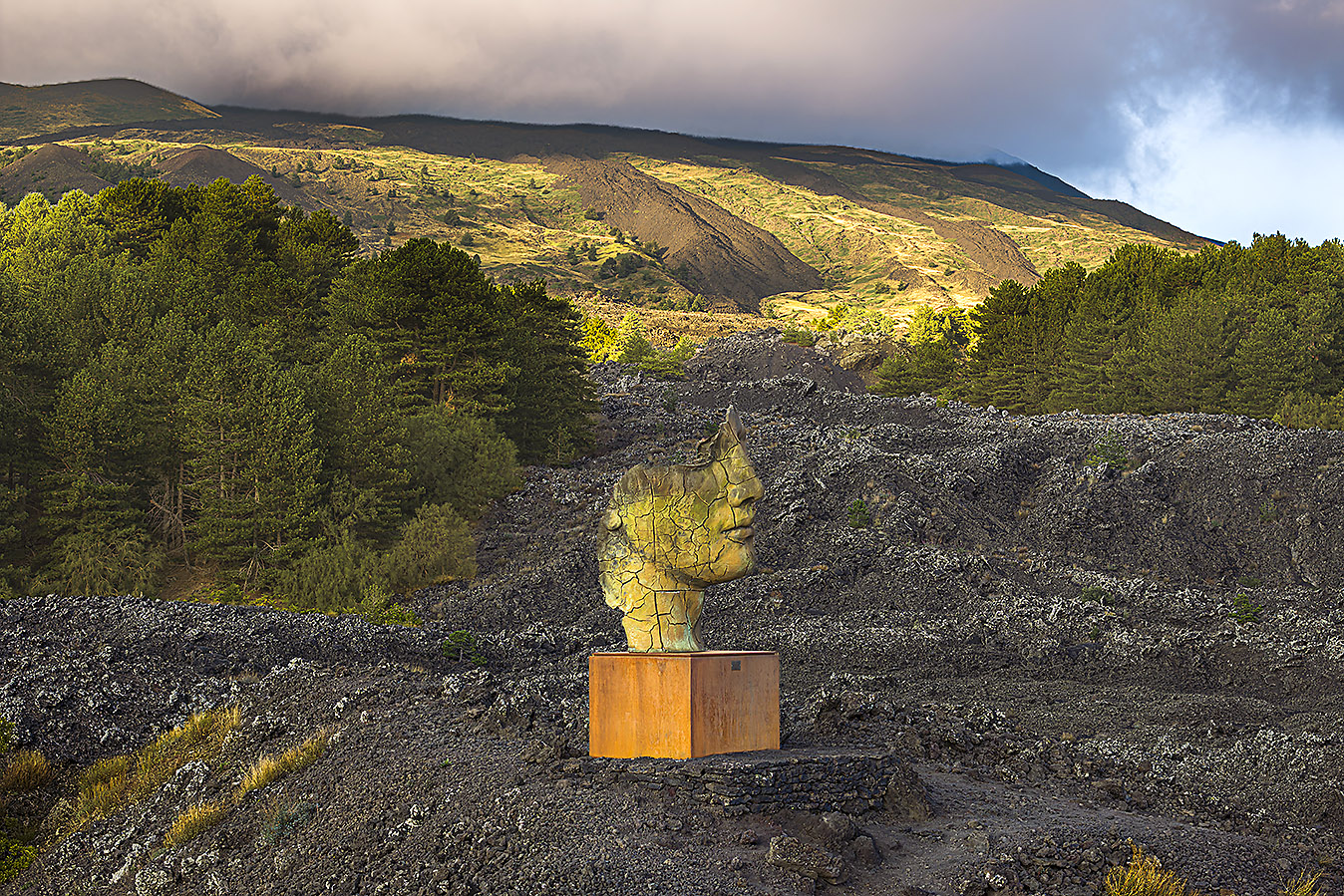
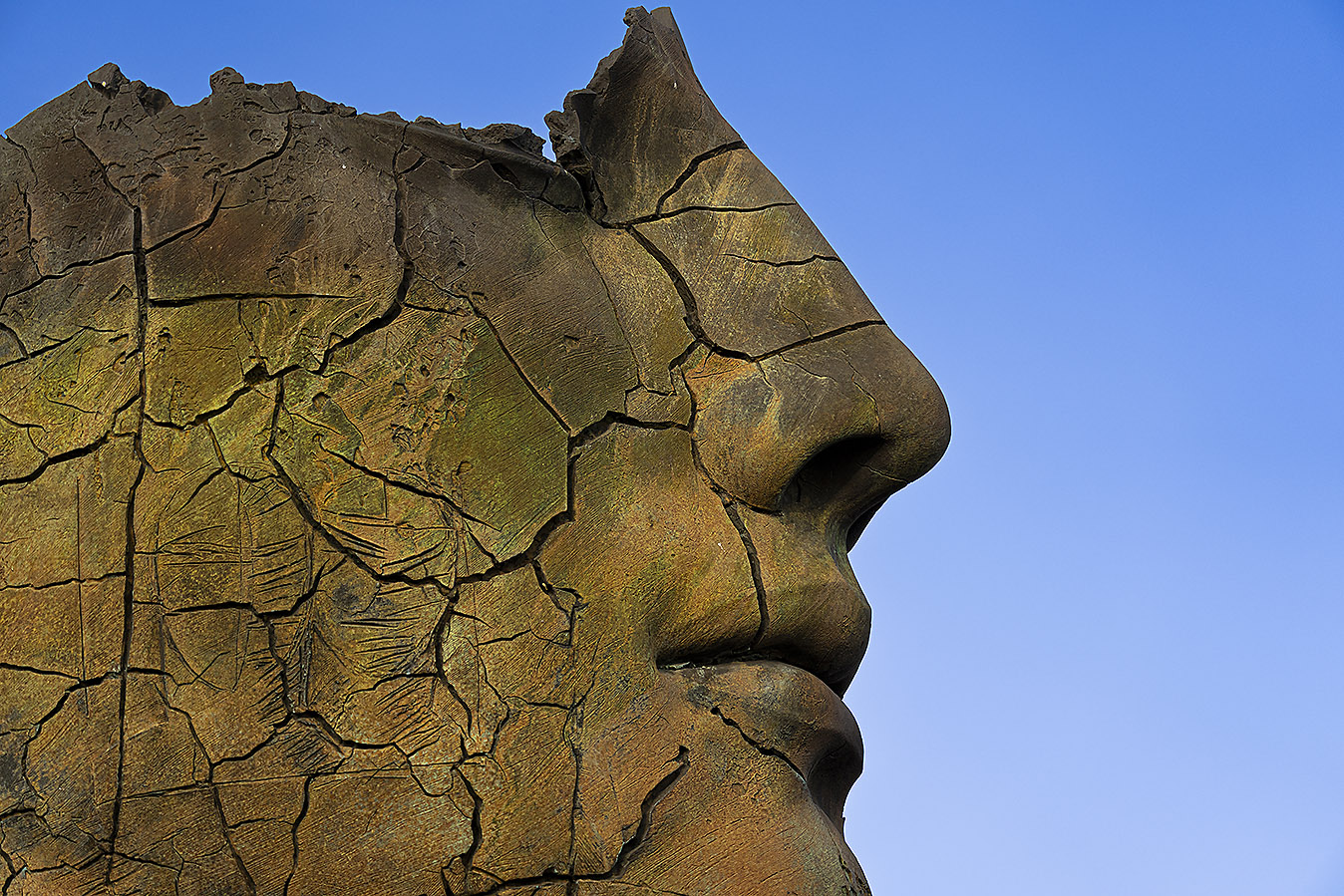
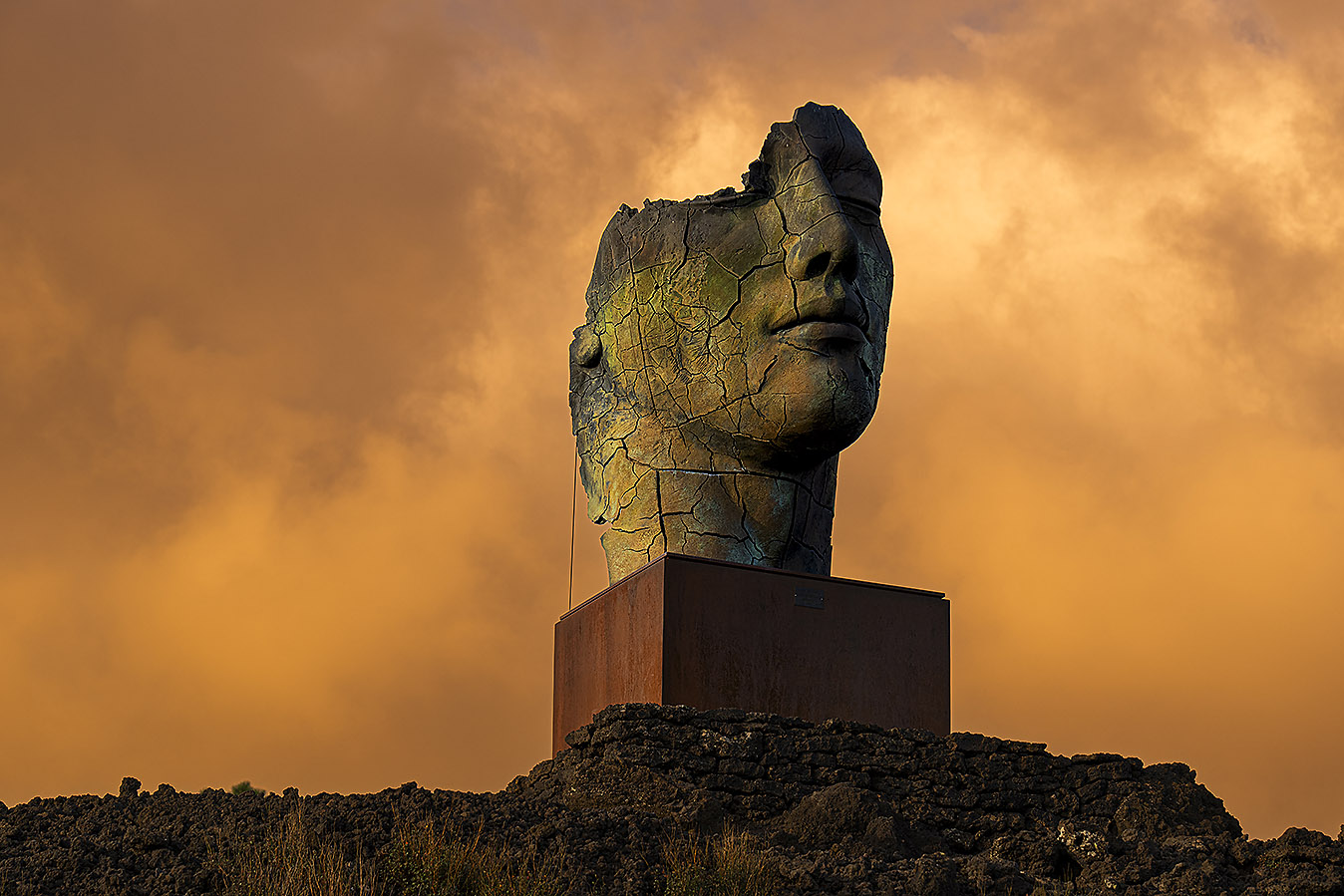
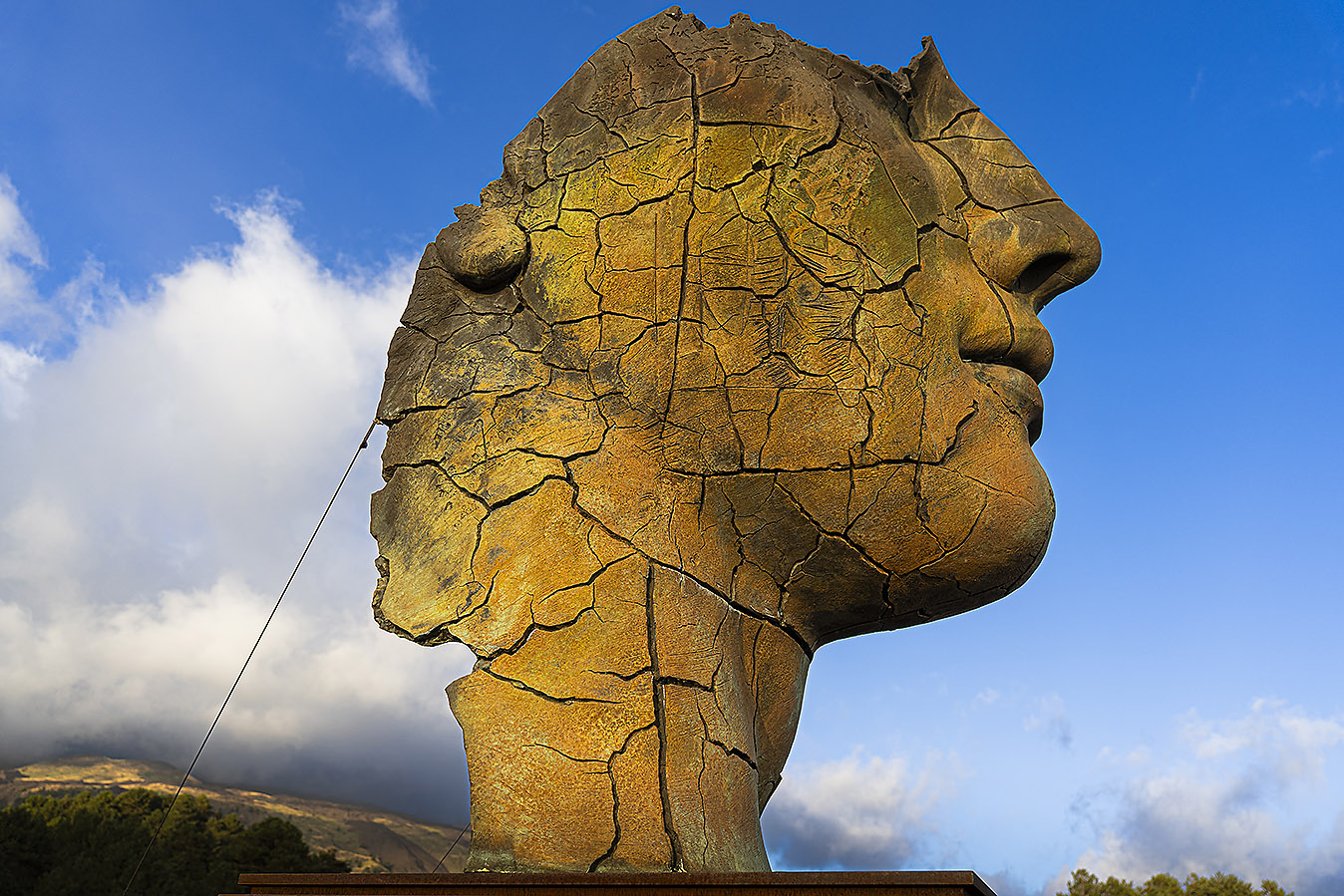
On Mount Etna, at an altitude of 1,700 meters, stands one of these works that, for me, is worth the entire trip to Sicily. “Teseo Screpolato” (Cracked Theseus) in the Serra la Nave area, in the municipality of Ragalna (Catania), sits atop a lava flow: the fragmented, cracked face of the Greek hero Theseus gazes out at the sea. The cracks symbolize human fragility in stark contrast to the eternal power of the volcano.
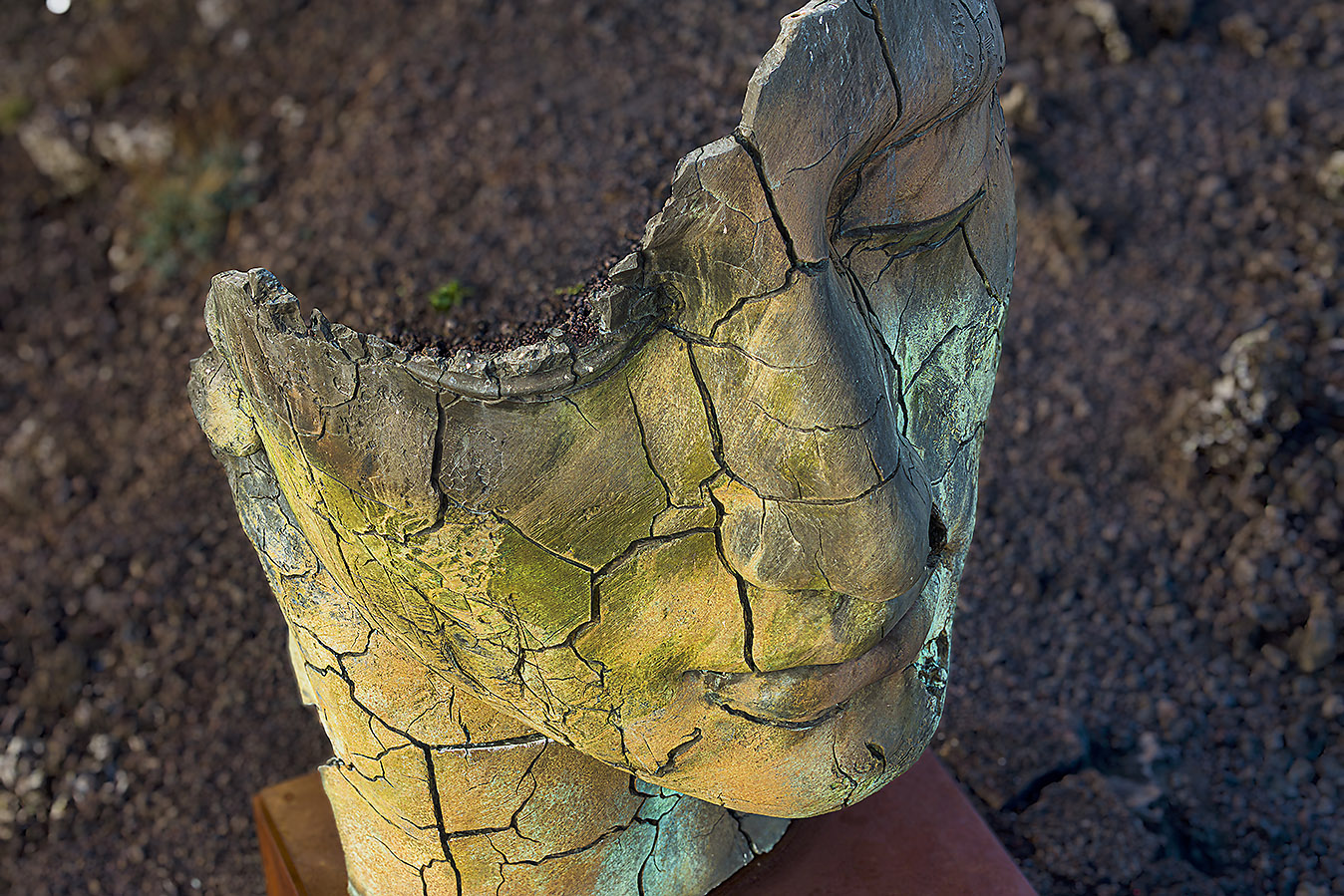
The bronze work, created by Mitoraj in 2011, is placed on a cubic metal support facing the Gulf of Catania and the Ionian Sea, as an integral part of an unusual sculptural trail that began on the island of Ortigia (near Syracuse). It depicts a heroic face with half-closed eyes, split in half and marked by cracks that justify its name in reference to the fragility of modern man. The itinerary inaugurated in the spring of 2024 featured a posthumous exhibition of thirty statues by the sculptor displayed across Maniace Castle, the Necropolis of Syracuse, and Etna Park, all traveling works now exhibited around the world under the title “Mitoraj – The Gaze, Humanitas and Physis.”
After spending 40 minutes driving through black lava, suddenly, around a bend, Theseus emerges, imposing and proud, with a gaze lost in space, completely detached from all earthly things. The face, traversed by the famous fractures that characterize the Polish artist’s poetics, seems to emerge directly from the Earth’s crust like an archaeological artifact resurfaced from an era of forgotten heroes. The landscape itself speaks to the power of Mount Etna. It explains, more than any concept or study, how powerless man is compared to the force of nature. And this fragile Theseus, much like his cracks, tells precisely this story: how fragile man is within the nature that surrounds him, even as he so often tries to violate it.