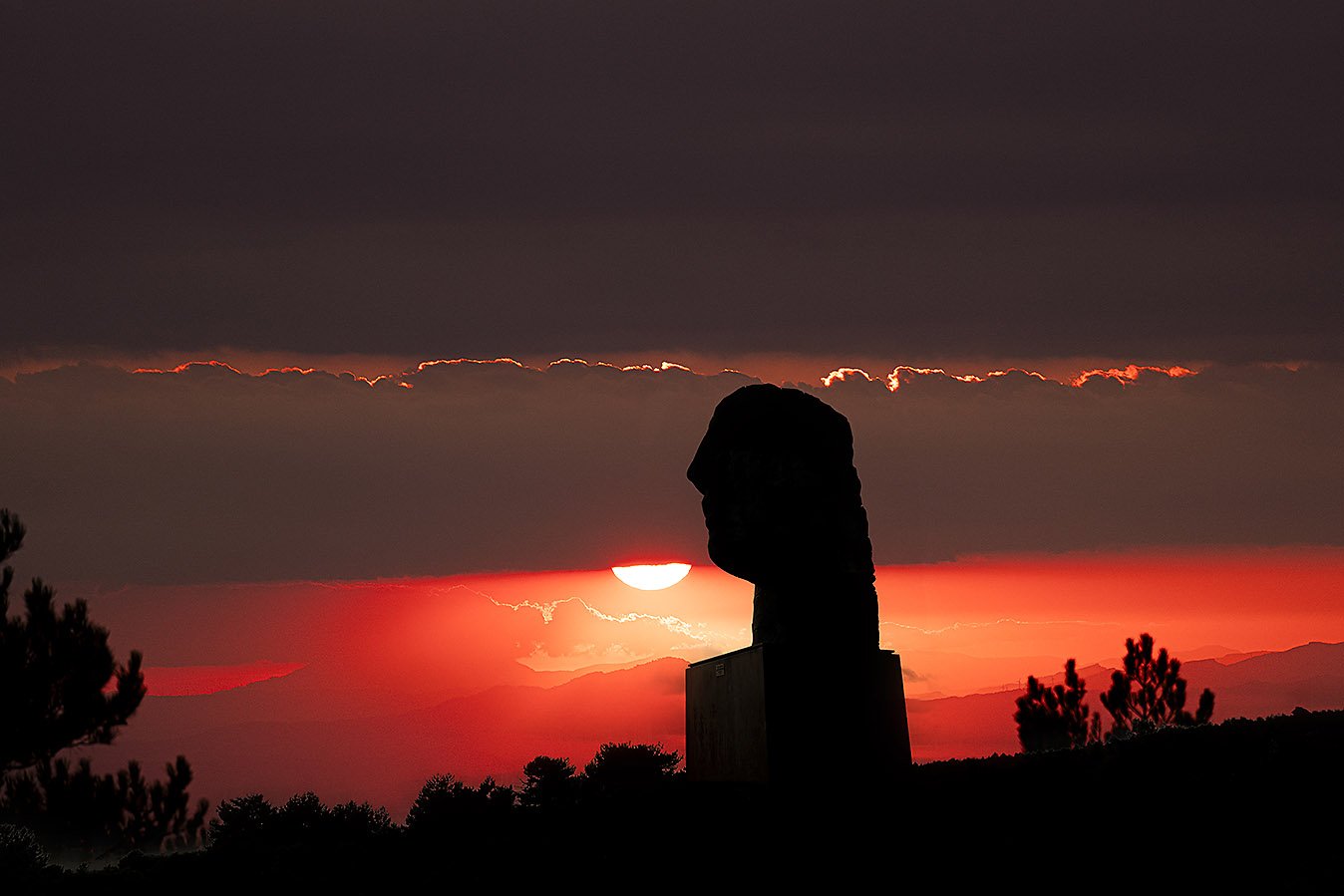
India part 2 – Uttar Pradesh & Rajasthan
We leave Calcutta feeling as if we have returned from a war. And indeed, the war is still within us. Some more than others. Those of us who started earlier are already almost past the acute phase, but those who reacted later are experiencing it now. Sitting on the sofas in the lobby, we sip hot tea, not knowing whether our bodies will perceive it as yet another affront or as a caress. Our flight to Delhi departs in the morning, so we leave the hotel early. Here, we say goodbye to the driver of the minibus who ferried us around Kolkata. Unfortunately, our guide is not here because he lives far away. He had waited for us all morning the day before, but none of us felt up to traveling in our condition, so we ‘released’ him. From Delhi, and for the rest of our journey, we will have a new minivan and a new driver. Meanwhile, we will have different local guides for each destination. Once we arrive at the airport and have collected our luggage, we check in our large suitcases and then proceed to security control with our bags full of photography equipment, cables, hard drives, batteries and power banks. In short, the standard kit for digital photographers. So, security checks at Indian airports are a source of stress for us Westerners. For Indians, the concept of ‘time’ is different from ours. Expecting to get through security checks at the pace we are used to is an approach that only leads to frustration. We begin to get a taste of this when, after passing through the metal detector, a diligent soldier holding a baseball bat–shaped metal detector checks every inch of our clothes, crease by crease.
One wonders, if the metal detector didn’t go off, why give us a ‘massage’ with the baseball bat? He doesn’t see it that way. In fact, he doesn’t think, he ‘massages’ sadistically. But the worst is yet to come. After placing our bags under the X-ray machine as usual, every single one of them – absolutely every single one – is selected for a manual check. Not just ours, but those of all the other passengers as well. Here, too, the question springs to mind. But why use the X-ray machine if all the bags have to be checked by hand anyway? One of the mysteries of Indian airports. In short, we spend the next hour opening every zip on every pocket, unravelling one by one all the neatly coiled tangles of cables, weighing power banks by hand to assess their potential danger and passing the ‘empty’ bags through the pointless X-ray machine again, which, at this point I imagine is only there for show. All the manual checks are carried out strictly without gloves, with bare hands rummaging through all the items that we had painstakingly – and somehow – managed to pack into our carry-on bags. After all this time, we finally receive the long-awaited ‘OK’ and start packing everything back up. It seems we’re done, ready for departure. But no. Meet, from the tour operator, calls me to tell me that one of the hold bags contains a prohibited item.
The question I’m still asking myself is how this news reached my contact when he wasn’t with us at the airport but in the office. The fact is, he tells me to contact a ground stewardess on our flight who will arrange for one of the group to go back through security to remove the prohibited item. Here too, the concept of time is stretched. As the departure time approaches, we are unable to get back out to our checked-in luggage. The reason becomes clear when, shortly afterwards, a queue forms of passengers from our own flight, all facing the same problem. Once resolved, we finally set off for Delhi. A flight of just over two hours to cover the 1,500 km distance from the capital of West Bengal to the Indian megacity which, with its nearly 32 million inhabitants, is the third or fourth most populous metropolis in the world. All in all, a peaceful flight, save for a brief fainting spell suffered by one of our traveling companions, weakened by the events of the previous days. On arrival in Delhi, we meet the hostess who welcomes us and takes us to the minibus. Here we meet our new driver, a gentle Indian gentleman with an unpronounceable name who will be our driver. The interior of the bus, with its leather and wood panelling, gives the impression of being in business class. We head straight for Vrindavan, where we will be staying for the next two nights and where we will experience Holi. A sacred city, much like Varanasi, it is forbidden to consume any form of meat as a sign of respect for the Hindu religion. But we will talk about Vrindavan and Holi in the final part of this travel trilogy. We continue on to Agra and the Taj Mahal, which we visit on the very afternoon of our arrival as it is closed the following day. The next morning, we set off before dawn. The Taj Mahal stands out against the red sky, reflected in the waters of the Yamuna, the river flowing right beneath it. We’re a smaller group today since two of the group preferred to get a bit more rest. Our guide is a bit reluctant to let us go right down to the riverbank because, he says, it’s closed for safety reasons. We play smart and, between Google Maps and visual navigation, we finally find the best spot. We make the most of the morning light for a while longer before heading back to the hotel and, after breakfast, setting off for Jaipur, the Pink City. We arrive in Jaipur in the evening after a long journey and, once at the hotel, over a welcome cocktail and a snack, we meet our guide, Nidhi. It’s evening and we’re tired, but we agree on plans for the next day. We head to our room, have a shower, dinner and a bit of rest. Our days in Jaipur are packed: Nidhi shows us round – she really knows her stuff and regales us with interesting facts about her city. We leave Jaipur after visiting a place just outside the city where they dye huge lengths of fabric, which they then hang out to dry on towering frames. Next stop, Bikaner, the only city I’d never seen on my previous trips to India. We’re already in the Thar Desert, a fascinating place, and Bikaner used to be a stopping point for caravans crossing the desert. The city turns out to be very interesting, not only for Junagarh Fort but above all for the bustling activity in the city centre, where motor vehicles, the ever-present cows and crowds of people jostle for space. To avoid the tuk-tuks, cows and mopeds, people are forced to ‘dance’ through the gaps. The following morning, again at dawn, we discover the Cenotaphs, tomb monuments which, at this hour, are all ours. The next destination, which is also the final stop on this Indian journey, is Jaisalmer, the jewel of the Thar Desert, in my opinion one of the most magical places in the whole of India. Just 150 km from the Pakistani border, Jaisalmer is also the most advanced outpost of the Indian land and air forces. The neighbouring Islamic region is turbulent and far from peaceful, so this is all an area of military interest. But little changes. Jaisalmer is an incredible place, to which I am bound by indelible memories. High above, the fortified city dominates, protected by 99 bastions. It is the only fortified citadel in India where people still live and go about their daily lives. Access to the fortress involves a winding climb that winds its way through several gates that once served to protect against invasions. There is a constant call to welcome tourists into the cafés, little shops and restaurants that open onto the ramparts and look down below. Here, the photographs take themselves. You just need to wait a little. A marvel not to be missed in the city is what was once the home of a wealthy family, the Patwon Ki Haveli, a masterpiece carved in stone. I have time to get gored by a pushy cow that didn’t want to share the alley with me. I return home with a stomach bug that hasn’t quite cleared up and a bruise the size of an orange on my side. But India is always worth it, no matter what sacrifices you have to make. The photos that follow are a sort of summary of what you’ve just read so far